


EVER HEARD OF MŪLA-GAYĀ?
It’s called Dhamlej today, 33 kms south of Sri Somanatha Kshetra. Google describes it as a “quiet, active fishing and agrarian village,” indicating the complete erasure of its hallowed past.
It was a renowned Surya Kshetra commanding sanctity equal to Modhera; its very location impelled this renown. Dhamlej was one of the great hubs of Saurashtra-Desha. Its Surya Mandira, destroyed as usual by the unclean Mlecchas, was rebuilt and rebuilt and rebuilt until it couldn’t be rebuilt again. The temple’s memory has been wiped clean in the devotional consciousness of its current inhabitants.
In the 1870s, Major J.W. Watson, President of the Maharajasthanik Court of Kathiawar, toured the whole coast of Saurashtra and was stunned by the copious heaps of inscriptions that he discovered; like the Vindhya-Parvata, the heap kept jutting upwards until he was exhausted. But he was no Agastya and so, he wrote a recommendation to the Archeology Department: “I trust that the Archeological Department will not consider this interesting region unworthy of scrunity.”
The Dhamleja Inscription
One such inscription is numbered 39 and titled Dhamleja Inscription, dated 23 June, 1380 CE. Its significance is severely underrated on the vaster canvas of Bharatavarsha’s history of the medieval period. Its heavily concised version tells us the same story: how Hindus managed to continuously recover and restore their sacred spaces under the hawk-like watch of the hated Mlecchas.
In 1939, epigraphist, archeologist and historian D.B. Diskalkar visited Dhamleja and saw the same inscription. It was a sight for sore eyes. Let’s read it in his own words:
Dhamleja is a very old village in the southern part of the Junagadh state at a distance of 11 miles south east of Sutrapada. To the west of the village there is a celebrated Kunda called Vishnu Gaya. It is also called Cakra Tirtha. The present inscription is lying there under a pipala tree.
I gave up after spending hours in vain online trying to ascertain whether the Vishnu Gaya Kunda still exists in Dhamlej at the same spot. I will be truly grateful if someone from Dhamlej — or someone who has actually seen it — can reassure me.
Gurjara-Desha in Disarray
FOUR CENTURIES after Mahmud of Ghazni ravaged the Somanatha Temple, Ala-ud-din Khalji’s prized concubine Malik Kafur stormed Saurashtra and wasted it. It was the beginning of the end of effective Hindu rule in Gujarat. Yet, Hindus stubbornly held on, grouping and recouping their strength if they spotted an opportune circumstance. Thus, late in the reign of Firoz Shah Tughlaq, the Chudasamas were still a formidable power lording over large parts of Junagarh, to which Dhamlej belongs.
In 1377, Firoz Shah appointed Farhat-ul-Mulk as Governor of Gujarat.
Firoz Shah Tughlaq’s so-called Sultanate resembled his character - bigoted, weak, wild, whimsical and unstable. Farhat’s title as Governor was rather pompous because he didn’t have the whole of Gurjara-Desha under his control. Several Hindu rulers were in active rebellion and some had reasserted their independence. Even within Junagarh, the Vājā Raja, Bharma had full suzerainty over Prabhāsa.
Which is the stage on which the story of the Dhamleja inscription unfolds.
 Team Dharma Dispatch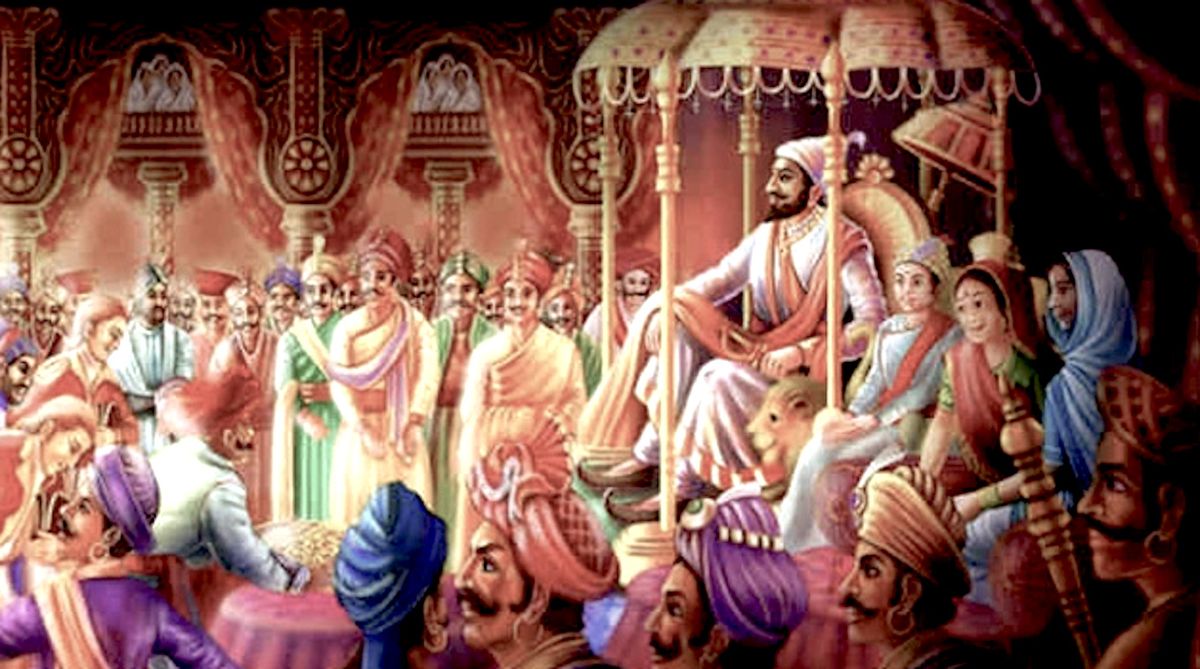
 Sandeep Balakrishna
 Sandeep Balakrishna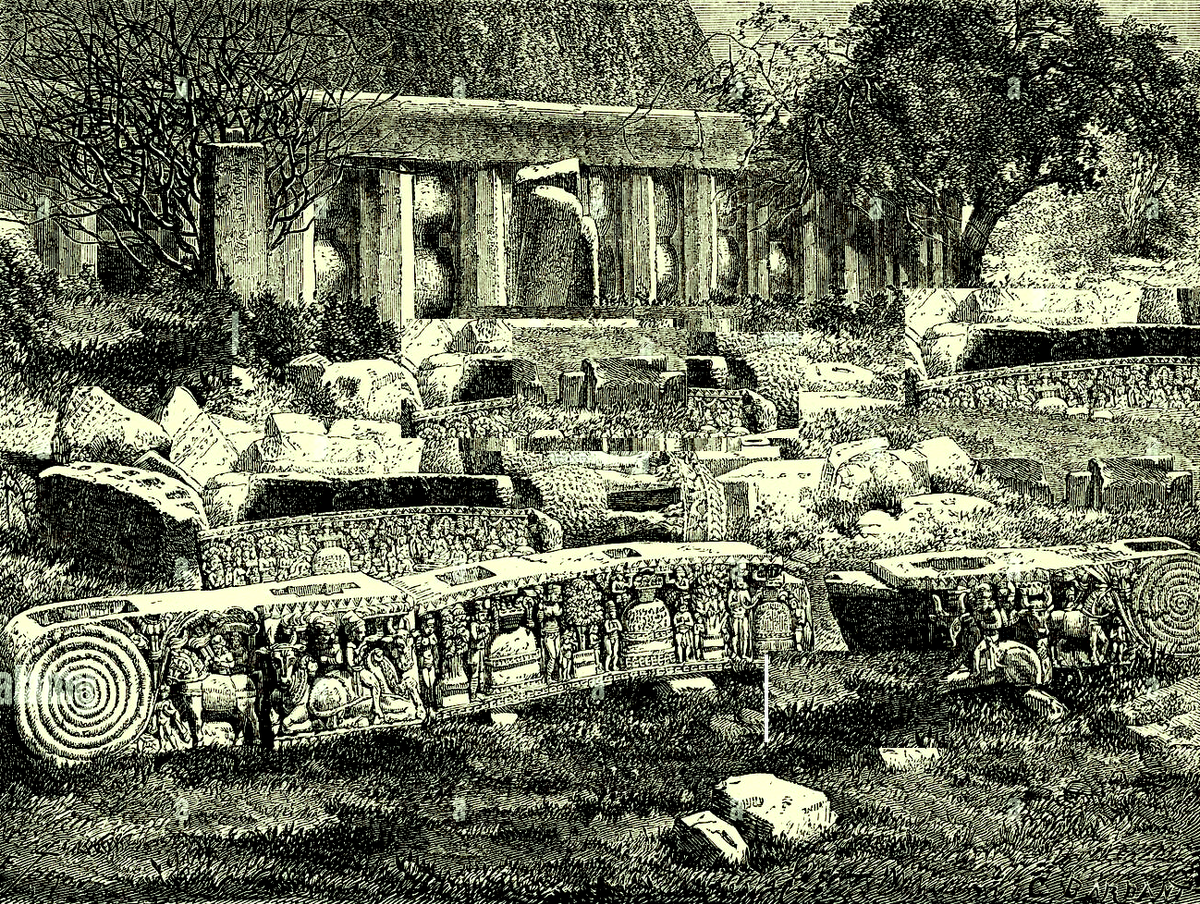
RAJA BHARMA's celebrated Chief Minister (Mukhya-Sachiva) was Karma Simha (corrupted as Karamśi), a devout Porwal Jaina (Porwal is a corruption of Prāgvāṭa). He restored and repaired the ruined Surya Mandira and rejuvenated the aforementioned Kunda at Mūla-Gayā. He also built a massive trough at the city gate of Prabhāsa-Pattana so that cattle could drink water from it.
Karma Simha descended from a distinguished ancestry of ministers who had served several Rajas of Gurjara-Desha. His father, Rāṇō (Rāṇa) had protected Brahmanas, safeguarded Dharma and maintained the prosperity of the kingdom when the “earth was suffering under the atrocities of the Mlecchas.”
Karma Simha was a devout Bhakta who unfailingly performed the afternoon Ārādhana (the inscription’s text reads, Mādhyānhikīm anudinaṁ) of Somanatha. Following his illustrious progenitor’s path, he persuaded Raja Bharma to grant a village to Brahmanas as an Agrahara so that they could safely devote themselves to sacred learning, teaching and thereby preserve and perpetuate the ancient sacred traditions. This village was named as Meghapura (Mēghapurāgrahāram) in the honour of his valourous elder brother, Megha-Nripa who had attained Svarga.
The Dhamleja inscription unambiguously testifies to the grim reality of what Turushka depredations had reduced Gurjara Desha to. In Major Watson’s words:
Given such explicit mentions in all such contemporary Hindu records, the magnitude of historical crimes inflicted by Leftist vandals become even more pronounced.
To turn to Major Watson again, he notes how the whole coastal stretch covering Kadvar, Patan, Sutrapada and Dhamleja was “abounding in inscriptions and ancient temples… perhaps unique of its kind and … doubtless far more ancient than its more famous neighbour [i.e., Somanatha].”
It appears that Dhamlej is en route to becoming an urban tourist spot given that almost every Google search result points to “top tourist attractions nearby.” These invariably include “tranquil” beaches, which will lose their tranquility sooner than later.
Meanwhile, I’m desperately curious to know whether the Vishnu Gaya Kunda still exists. D.B. Diskalkar had seen it 86 years ago; it seems like Treta Yuga.
And I’ll leave you with some food for thought: exactly how does an evocative name like Mūla-Gayā become Dhamlej?
|| Om Sri Arkāya namaḥ ||

Support our Sacred Work