


Read the Previous Episode
 Team Dharma Dispatch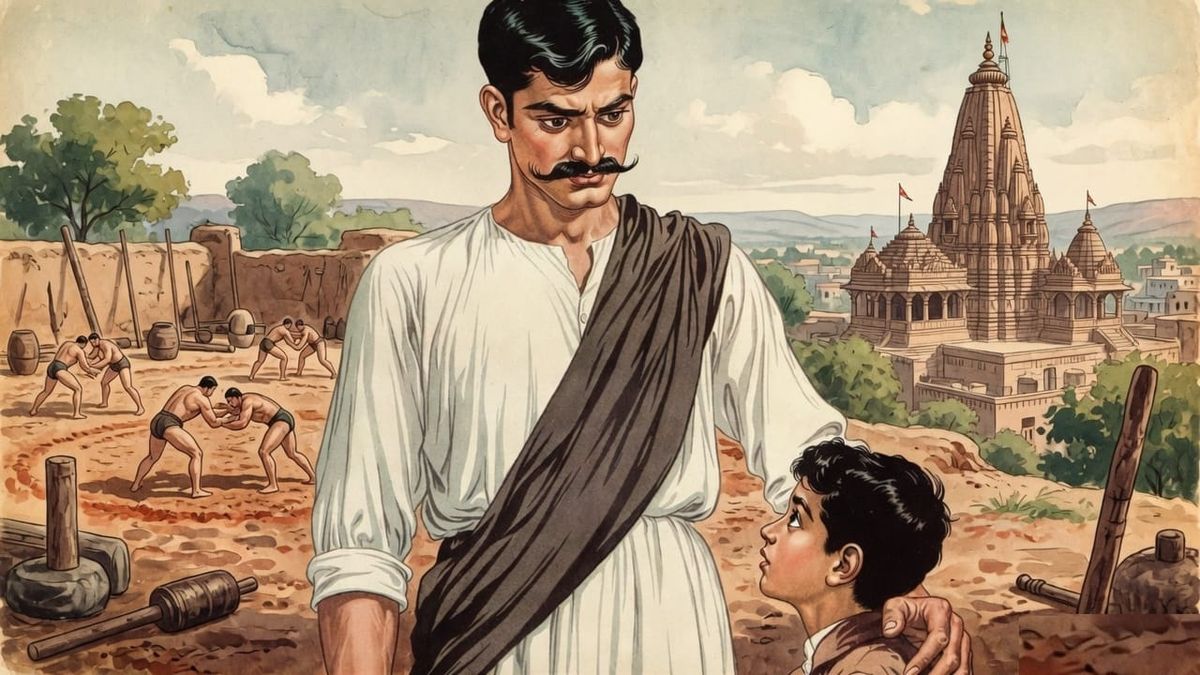
VI
Events that have been or were soon to be matters of comment and even heated discussion among the grown-ups amidst whom my life, more by choice than by accident, was cast, served to impress my new uncle upon my mind. He was represented as being a member of a band that was upsetting the social order.
They were credited with good intentions. They meant, to be sure, to put “spirit” into the Hindus—to make the Hindus stand up like men. More than this, they were desirous of opening up for them economic opportunities by addressing themselves to certain callings—weaving, for example—which were largely left to non-Hindus.
Their agitation, however, was of a disturbing nature. They caused contention. They brought Hindus much ill-will.
As if this were not enough, they engaged in debates and discussions that roused considerable acrimony. Christians and Muslims alike waxed wroth.
The officials detested the Aryas even more than did the Hindus. They regarded them as Satan’s spawn. This because of the discord that their contention roused in a peaceful population. No it hazoors (“yes-men”) themselves, they stirred others to walk erect, with head held high in the air.
Much of this talk was not fully intelligible to me till later years. I fully understood, however, that no one was more actively engaged in furthering this social revolution than my new-found “uncle.” Contention was the breath of his nostrils. One of his companions—Pandit Lekh Ram—had been done to death by some fanatic. That fact stood out above all talk.
VII
The more I saw of Uncle Munshi Ram, the better I liked him. Whenever he met me when I happened to go to Jullundar, where he then lived and practised, or when he came to Hoshiarpur, he would quietly ask me how I was getting on with my writing. Did my father frown upon my giving time to it instead of studying my school books? Did my masters (the word “teacher” was not used in the Punjab of that day) object?
On one occasion when he and I chanced to be by ourselves, he turned the pages of his own life-story backwards. “There was a time in my student days,” he told me, in his forthright way, “when I did not study as hard as I should have. The result was that I failed to pass the examination. I disappointed my father. That pained me more than the humiliation I suffered in my own sight.
“Now, my boy, you see to it that you do not make the mistake that I did. It cost me dearly. Be sure that neglect of a similar nature does not cost you even dearer.
“After all, you have plenty of time ahead of you. After you get through with the school—and college—books, you can devote your whole self to writing. Then no one will—at least legitimately can—object. You can get ahead with writing as much as you please. All you please.”
He had a way of repeating words and phrases. They emphasized what he said. At that point in my life’s journey that method was to me of immense importance—of great value.
VIII
Either at this juncture or a short time later, Uncle Munshi Ram confided in me that in one respect he was something like me (just note the delicacy with which he paid this compliment!). He wished to do nothing so much as to write—as to speak. But—
But the law interfered. He had to study the cases (I had not yet learnt the word “brief”) that he had to conduct. Files had to be examined in court, in addition to the papers his clients had entrusted him with. He had to appear before the judge, who, at times, sat with assessors. He had to ask searching questions—he had to plead.
How he disliked it all! There was so much in it that was dishonest. Crooked. Downright crooked. He wished to be rid of it all. He would get rid of it. He had already given up much of the work. He accepted only a few cases. Seldom did he appear in court. He longed for the time to come when he could give up the business altogether.
“And then, Uncle, what will you do?”
“I will write—write—preach—preach.”
I saw that the conversation was veering towards the region that I had been told endangered the faith—Sikhism—in which I was being brought up.
“Talk all you wish with Uncle Munshi Ram,” father had admonished me, “only do not let him make an Arya of you.”
The way father said this implied that no worse disaster could befall me. With one exception. My being influenced by the Reverend Doctor Chatterjee.
That missioner lived in the Mission Compound, near the playground. To it I went every evening. While on my way thither or back I sometimes chanced upon him. Now and again I even contrived to meet him. He used to give me papers and magazines to read and encouraged me to write.
IX
Something that Uncle Munshi Ram had written in one of the papers he conducted must have upset father about this time. Or more likely the offending article had emanated from the pen of some lieutenant of his. Some of these worthies were Sikh in appearance. They let their zeal in the Arya Samaj cause drag them into regions that made them, in father’s sight, devils incarnate.
Or it may have been that his talks with me he had caused annoyance. Their trend cut across father’s ambition for me.
I was to be sent to England and, if I could manage it, was to enter the Indian Civil Service. I was otherwise to be called to the bar.
Uncle Munshi Ram hated the idea of my entering any service, however highly esteemed that service might be. He hated legal chicanery even more.
Whatever caused annoyance, father said to me one day: Munshi Ram is like the cat that, after devouring 99,000 mice, proceeded upon pilgrimage.
 Sandeep Balakrishna
 Sandeep Balakrishna
 Team Dharma Dispatch
 Sandeep Balakrishna
 Team Dharma Dispatch
In view of all that had gone before, I was astonished at the taunt so wryly flung by him at one whom he had taught me to call—and to treat—as uncle. Knowing his ways, I kept silence. That silence encouraged him to pour out the vials of wrath that had accumulated in his system.
“To-day he is acclaimed a Mahasha (high-souled one),” father said, the acid of irony dripping from his accents. “What was he yesterday, though—and the day before?
“I will tell you. He was a drunkard. Worse. He consorted with women of evil repute. As for eating meat, he, before he turned (an) Arya consumed so much that you would be lucky if you came within a hundred miles of the quantity, even if you live to be a thousand years of age.
“You see, he was ushered into the world by a police daroga. You know what that means. He himself was in the police service for some years. What need to say more?”
Father could—and did—dramatise events when his imagination was stirred. Divested of the twists and turns he gave, however, he was telling only the truth. What I learnt, from time to time, from Uncle Munshi Ram and from other sources, confirmed his statements.
To be continued
Support The Dharma Dispatch
