


Editor’s Note
AT THIS DISTANCE in time, we do not associate West Bengal and specifically Calcutta, with Sanskrit. In the heydays of Hindu rule, the Gauda and Vanga Deshas rubbed shoulders with great centres of Sanskrit learning in Bharatavarsha. Even under the dark and prolonged spell of Muslim rule, Sanskrit flourished to an extent in the region thanks largely to the patronage of Hindu chieftains and zamindars.
Indeed, more than six decades after the decisive Battle of Palashi, British administrators found abundant numbers of Sanskrit Pāṭhaśālās throughout the Bengal Presidency. These proved to be the biggest obstacles to Macaulay’s evil project of spreading English education. The resistance they offered to English methods is an independent chapter of heroism. It is this resistance that led him to physically uproot traditional centres of learning; a slice of this story has already been narrated in the heart-rending episode of how the Golisri Sanskrit College was destroyed by Macaulay.
There is an ironical side to this story. Around 1822, the same Macaulay and James Prinsep made a recommendation to Governor General Amherst to establish a dedicated Sanskrit College in Calcutta “to impart knowledge of ancient literature, philosophy, Hindu Law, grammar, Indian Culture and to promote the learning of Sanskrit among British officials as well as the Indians.” Amherst laid its foundation stone in 1824.
When the proposal to establish this college was made public, it received mixed but overwhelming response. Among others, notable Bengali papers such as Samachar Chandrika and Samachar Darpan kept a keen watch on the developments and communicated them to the public. These are the two primary sources that supply the most authentic information about this colonial British project.
The following are some translated extracts from reports published in the Samachar Chandrika and Sambad Kaumudi on the founding and evolution of the Sanskrit College, Calcutta. The reports cover a period of 1822-30. No editorial commentary has been added except for helpful headings and dates in the Gregorian Calendar.
Happy reading!
1822–1830 · Foundation and First Statutes
13 April 1822 / 2 Baisakh 1229
A new college, or house of learning. By the care of the Honourable Company there is to be in Calcutta a school of a kind not seen before, where grammar and the several shastras shall be read and taught. On the twenty-first of August 1821, the Company’s officers named a principal gentleman of the Board of Revenue, and another gentleman learned in the manners and learning of this country, to be governors of the future college, and asked of them a draft: what sciences shall be taught; how many professors appointed; by what rule the scholars’ maintenance shall be paid; how much for the purchase of books and how much for the publishing of new books; how long the scholars shall remain, and how they shall be examined; and in what place the college shall be built, and at what cost. All this was to be written down and determined.
The gentlemen so named, having received that paper of questions, considered and sent up a draft, which is here made known.
Only Brahmin boys are to be admitted into this college; and of them, only such boys as have completed twelve years of age. Those who already know a little of the Kaumudi, śabdakalpadruma, Sarasvata and Mugdhabodha grammars may enter. Those who have read those grammars and the books that go with them shall first take up the Manorama and the Shabdendushekhara.
Second, the Smriti current in Kashi, Mithila and those countries; third, the Smriti current in Gauda; fourth, logic (Tarka); fifth, poetics and astronomy; sixth, the Puranas; seventh, Samkhya; eighth, Vedanta—these studies shall be pursued.
Of teachers and their pay, these are the details: one poet and rhetorician, one mathematician, one eminent grammarian, two smartas, one logician, one astronomer, one Pauranika, one samkhya scholar, one vedantin, and one learned in medicine. Each shall receive sixty rupees a month. The keeper of books, sixty. Two correctors of written texts, eighty. One muharir (clerk-writer) and one copyist, forty. A doorkeeper, farash and the rest, forty. For the purchase of books, a hundred rupees a month, and a lumpsum of five thousand rupees for purchasing books initially; an appropriate site has been fixed near the new road in Bahu Bazar, and the house there will cost sixty thousand. Thus has the committee written to Council. Boys from twelve to eighteen years may be taken for the ordinary course; for the reading of Darshanas, scholars aged eighteen to twenty-four.
6 December 1823 / 22 Agrahayan 1230
The Sanskrit College. It was rumoured that the Most Honourable Company meant to found a Sanskrit Pāṭhaśālā. That building has been begun near the round tank at Pataldanga. Until it is ready, No. 66 on the left of the crossing in Bahu Bazar has been rented, and there, the studies will take place. Brahmin boys will be taught grammar, Sahitya, Alamkara, Smriti, Purana, Vedanta, Jyotisha, Nyaya, Samkhya, Mimamsa and the rest, and pandits of those shastras are being appointed.
For lodging, Brahmin scholars will receive five rupees a month, and may live where they choose while they study.
Whoever desires a professor’s post, and whoever desires to read, should write a petition to the learned Dr Wilson and Mr Price; if those gentlemen find them fit, their wish may be granted. It is said that the reading of books and the hours of study will follow the custom of this country.
10 January 1824 / 27 Poush 1230
On Thursday the eighteenth of Poush, the first day of the European year—that is, the first of January 1824—reading began at the Sanskrit College in house No. 66, Bahu Bazar. Some account has already been given earlier.
The professors and the Shastras now taught are the following:
– Nyaya — Sri Nimacharan Shiromani
– Smriti — Sri Ramchandra Vidyalankar
– Alamkara — Sri Kamalakanta Vidyalankar
– Kavya — Sri Jayagopal Tarkalankar
– Vyakarana — Sri Haranath Tarkabhushan; Sri Ramdas Siddhanta Panchanan; Sri Govindaram Upadhyay
Fifty Brahmin scholars on stipend have been named for these shastras; many others will come and study under the prescribed rules. These last will not yet receive a monthly wage, but if they pass the fixed examination they may get a prize.
Hours will be settled according to the muhurtas of teachers and pupils. Some, it is said, will sit from the fourth daṇḍa of morning until the second prahar; some will come at the second prahar and stay till evening; some will teach from forenoon to afternoon. Other rules will be published next week.
21 February 1824 / 10 Phalgun 1230
Sri Lakshminarayan Nyayalankar has been named keeper of books, and Sri Rudramani Dikshit, professor of Vedanta.
Of the stipend-holders: fifty now receive pay; besides them some thirty have come to read those shastras. They will have no monthly wage, but if at the fixed examination they show mastery, they will have a prize; and if any stipend-holder fails, his place may pass to one of these. Books of many shastras are being bought. It is said a press will be set up within the school to print Sanskrit books.
Hours of reading: from eleven o’clock English time until four. On Ashtami, Trayodashi, Pratipad, Amavasya and Purnima there is no reading; also on Manvantara days and festival days. Most of the arrangement will follow the will of teachers and scholars.
 Sandeep Balakrishna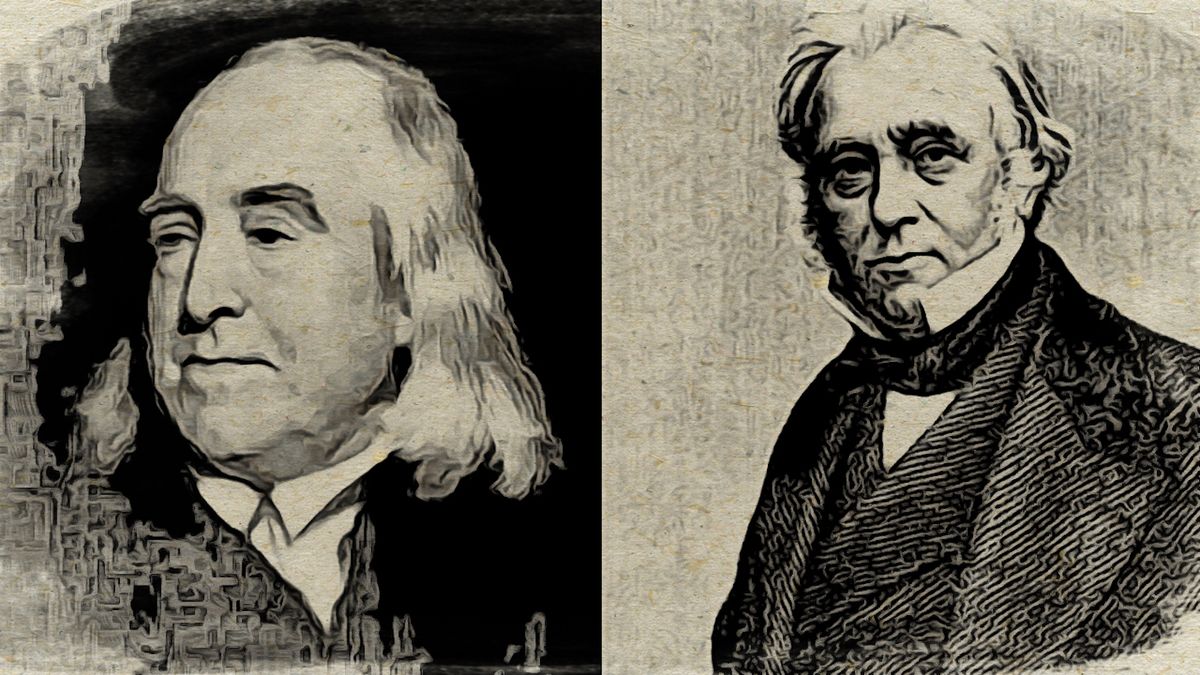
 Sandeep Balakrishna
 Sandeep Balakrishna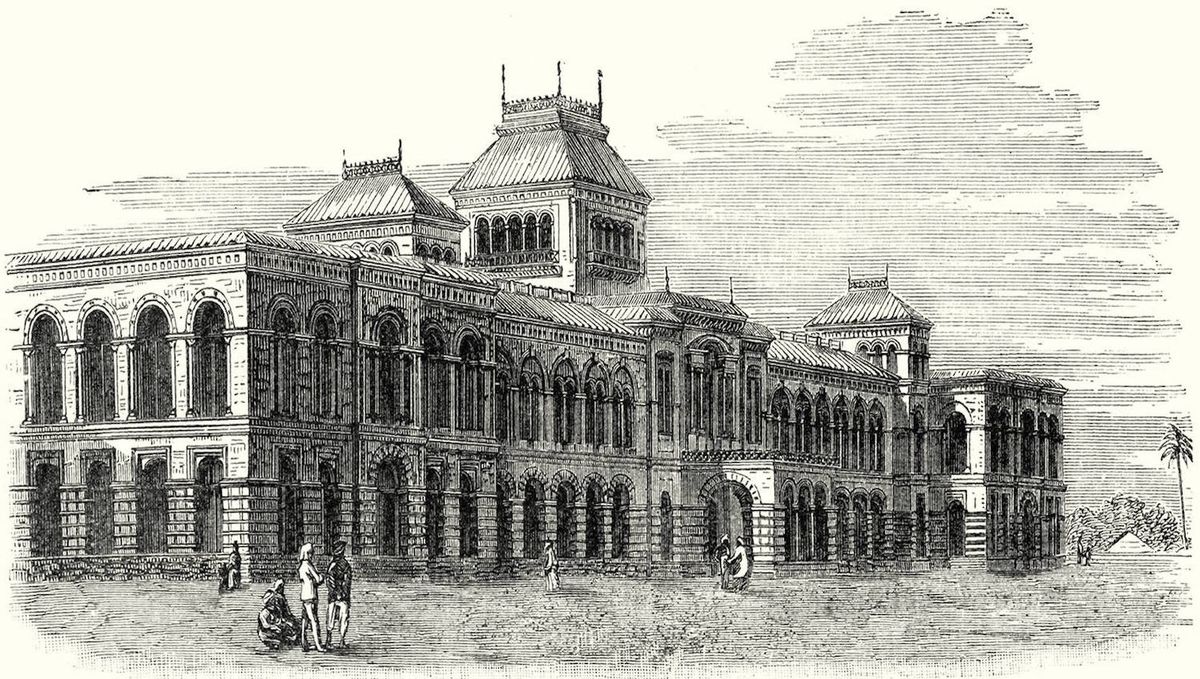
 Team Dharma Dispatch
 Sandeep Balakrishna
28 February 1824 / 17 Phalgun 1230
Rules of the Company’s Pāṭhaśālā
1. Whoever wishes to read must, between twelve and eighteen years, pass an examination in grammar before he may be allowed another shastra.
2. After three years of grammar, if he passes and wishes to study another shastra, he shall be placed with that professor; if he cannot pass, he shall be put out of the school.
3. Company scholars and outside scholars shall be examined every year.
4. New and old scholars shall receive five rupees a month from the first day of reading until the twelfth year.
5. He who reads more and does well at examination, if he be a Company scholar, shall keep his monthly pay and have a prize besides; lesser scholars shall have the prize only.
6. When after three years of grammar he passes and wishes to study another shastra, his professor shall give him a letter of praise, and the Secretary shall give him another, signed.
7. Whoever does not come at the fixed hour, or shows disrespect to the pandits, shall be expelled at once.
8. He shall read only what the pandit, judging his right to the shastra, sets before him; he may not read at his own pleasure.
9. If he has a petition, he shall make it known to the pandit.
10. When after twelve years he leaves, he shall receive a letter of praise in the Sanskrit language under the pandit’s name, and another in English signed by the Secretary.
11. Each scholar shall read only with his own professor, and never go to another.
12. The teacher of Yavana shastra, the writer of Yavana letters, the correctors of books, and all other servants shall work by the Secretary’s order.
13. Scholars shall read grammar three years, then Kavya and Alamkara and other shastras two years, then Jyotisha one year, and in the seventh year be placed with the professor of the shastra they desire.
Dated the first of January, on the amavasya of Margashirsha.
28 February 1824
Laying of the foundation stone. On Wednesday the twenty-fifth of February, in the afternoon, the foundation-stone of the Sanskrit College was laid at the place being prepared at Pataldanga. It is said the Freemasons, a fellowship among the Christians, came in their proper dress, with English musicians, on foot and in state, to finish that work.
22 January 1825 / 11 Magh 1231
The kind of reading now done here has scarcely come before our eyes or ears elsewhere. What in other places takes two years is done here in one, for except on days of Anadhyaya and festival, there is no break, and the professors’ care is plain. If this method holds [i.e., sustains], the scholars may be accomplished in many shastras within twelve years.
There are now one hundred and twenty-five scholars. Sri Hariprasad Tarkapanchanan has been named third professor of the Mugdhabodha.
22 October 1825 / 7 Kartik 1232
Sati. Kirtichandra Nyayaratna, a good Pandit, lately a professor in the Company’s Sanskrit College, died on Wednesday the twenty-sixth of Ashwin of cholera; his age was some thirty-five or thirty-six. His faithful wife went with him.
3 December 1825 / 19 Agrahayan 1232
Appointments. Sri Kashinath Tarkapanchanan Bhattacharya of Simulia has been named professor of Smriti in the place of Ramchandra Vidyalankar. Sri Gangadhar Tarkavagish of Kumarhatta has been named professor of grammar in the place of Kirtichandra Nyayaratna.
When Vidyalankar died, many Smarta professors sent petitions for the post. The officers took all the petitions and gave each man certain questions, saying that whoever wrote a true answer should have the work. Almost all answered; they were pleased with Tarkapanchanan’s replies and appointed him.
— Samachar Chandrika
4 February 1826 / 23 Magh 1232
On Wednesday the first of February, at the tenth Daṇḍa of day, yearly prizes were given to the scholars in the Sanskrit house of learning at Bahu Bazar. After the prizes, Mr Wilson praised the pandits and the scholars in Sanskrit. It is said the college will shortly leave Bahu Bazar for the new house by the round tank at Pataldanga.
1 April 1826 / 20 Chaitra 1232
The palace building for the Company’s school at Pataldanga is finished; in Baisakh the Sanskrit Pāṭhaśālā and the Hindu College will both go there. How they will be settled together we shall tell when we know.
— Sambad Kaumudi
13 May 1826 / 1 Jyeshtha 1233
We are glad to say that on Monday the twentieth of Baisakh the Sanskrit Pāṭhaśālā entered that house at Pataldanga.
Krishnadev Upadhyay, Vedanta pandit of the Pāṭhaśālā, died on Saturday the eighteenth of Baisakh; Sri Shambhuchandra Vachaspati has been named in his place, and one Yugadhyan Mishra professor of astronomy. We think the medical shastra too will be studied. Grammar, Sahitya, Alamkara, Smriti, Nyaya and Vedanta are now taught.
— Samachar Chandrika
28 July 1827 / 13 Sravan 1234
Sri Kamalakanta Vidyalankar, professor of Alamkara, has been named pandit to the court of Midnapur district; he left the college on the seventh of July, being the twenty-fourth of Asharh. Sri Nathuram Shastri of Gujarat has been named in his place.
— Samachar Chandrika
27 March 1830 / 15 Chaitra 1236
Today’s [Samachar] Chandrika prints a letter regarding the Sanskrit College; we write what we have to say.
If the sons of Brahmin pandits study English, there is not a shred of gain. Should they master both learnings, they will hold the six works of a Brahmin—Yajna, officiating [sacred occasions], study, teaching, gift and the receiving of gift—in contempt, and acquire a taste for worldly office; and even that they will not get.
For through the Hindu College and many other schools, the sons of men of worldly affairs have already become, are becoming, and will become masters of English: this one a diwan’s son, that one a clerk’s brother, another one, a khazanchi’s [treasurer] nephew, another one, a godown-sarkar’s grandson, and yet another one, kin to an auction sales-sarkar.
Those men will of course place their own in office. If the son of some mutsaddi’s guru or purohit goes and says, Appoint me, that mutsaddi, far from giving him work, will say, “You were born in an evil hour, that the son of such a man should seek service,” and send him away after shaming him.
Therefore if the scholars of the Sanskrit College read English they will fall between two stools and be ruined outright. If the gentlemen wish the people of this country to be masters of both tongues, let the Hindu College boys be taught English and Sanskrit, and let the Vaidya scholars now in the Sanskrit College be made thoroughly masters of English: that will serve the country, for knowing both shastras they will be able to practise medicine well.
— Samachar Chandrika
Donate to The Dharma Dispatch