

Editor’s Note
IN 1949, SIX BRILLIANT MEN wrote a book that almost singlehandedly turned the world’s attention against Communism: The God that Failed. It is basically a collection of six essays, each by Arthur Koestler, Ignazio Silone, Richard Wright, Andre Gide, Louis Fischer and Stephen Spender. The book sold hundreds of thousands of copies barely in a few years and was translated and sold worldwide in millions. It was so influential that the then CIA, in its long war against Communism and especially against the spread of Soviet propaganda among intellectuals, freely distributed it and sponsored radio broadcasts, documentaries and seminars based on its content.
What made the book special was the fact that its authors had been dedicated communists for decades until they realised that the ideology was intrinsically violent, anti-people and anti-life itself. That realisation was given a word: Kronstadt, “the moment in which some communists or fellow travellers decide not just to leave the Communist Party but to oppose it as anti-communists.”
When The God that Failed was published, India was in the throes of rebuilding itself and the country was basically a mess. Not all of the 550 Princely States were fully integrated. The war with Pakistan had just been concluded. The Nizam of Hyderabad had finally been crushed. Goa was still with the Portuguese and Pondicherry, with the French.
Yet, this mess was exactly what one deadly ideology relished: Communism. Not too many people back then had realised the true evil at the core of Communism and its long-term consequences if it were left to grow. However, a small and committed band of patriots foresaw it and formed a nimble group and decided to fight Communism tooth and nail. One man in this band would later become an icon not only of anti-Communism but lead the intellectual war in the Ram Janmabhoomi years. His name was Sita Ram Goel.
Four years after The God that Failed was published, Goel translated it into Hindi and publicised it. He was indeed among the most qualified and capable man to undertake this work: he had just relinquished Communism in its heartland in India, Calcutta. The following is the full English translation of his preface to the translation.
Happy reading!
THE INTRODUCTION to the original English book was written by Mr Richard Crossman, a left-wing Socialist writer and thinker in Britain. We are unable to publish a complete translation of that introduction because the book has grown much larger than anticipated. We therefore do not propose to reproduce Mr Crossman’s personal views here in full, but merely to summarise why the idea of writing this book came about.
Mr Crossman was once staying at Arthur Koestler’s house. During a heated political argument, Koestler said:
“Either you cannot understand, or you do not want to understand. This is the condition of all the narrow-minded, comfortable, anti-Communists in England. You hate our prophecies, and you are ashamed to be called our comrades. But remember this much: on your side, we are former Communists—people who understand the present conflict.”
The direction of the conversation changed. They began discussing why one person had become a Communist, and why another had left the Communist Party—or had not left it.
When the argument again grew heated, Crossman said: “Tell me honestly what you felt when you first enrolled in the Party. I do not want to know what you think about the Party today. What did you feel that day?”
Koestler began telling his story, whereupon Crossman interrupted him: “All this ought to be told to you in the form of a book.”
Thus they began discussing those former Communists who might be willing to recount their personal histories. Several names initially came to mind, but before the night was over they had settled on six writers.
They were not thinking of increasing the volume of anti-Communist propaganda. Their purpose was to study the circumstances that had led so many people to become Communists between 1917 and 1939.
It is not within everyone’s power to recreate that atmosphere in their minds through imagination alone. Those who are still actively engaged in politics certainly cannot do so, because their sense of self-respect does not permit them to acknowledge their own mistakes. For this reason, they selected writers who had not become entangled in any political faction.
We must remember that, from the Russian Revolution until the Stalin–Hitler pact, countless writers, intellectuals and thinkers in Europe and America were attracted to Communism.
The First World War dealt a severe blow to Europe’s self-confidence. Subsequently, the Depression of 1929–30 struck at capitalism and shook Europe’s democracies, bringing many of them close to collapse. The rise of Mussolini and Hitler, the war in Spain, and the destruction of Abyssinia and Czechoslovakia were all events to which Europe’s old liberal establishment could not respond with sufficient courage.
Disillusioned by the failures of liberalism, many idealists were searching for an alternative. For many of them, Soviet Russia began to offer a glimpse of a new dawn.
Various social, economic and cultural experiments were under way in Russia, and Moscow continued to proclaim that it was creating a new human being and an unprecedented human society. The scientific, economic, political and cultural progress of the nineteenth century had planted deep within European minds the seeds of hope for a future golden age.
Many intellectuals, with complete faith and their eyes closed to contrary evidence, sat convinced that this golden age would come to their own countries from Soviet Russia.
There was another reason, too. Before the Second World War, Russia was an inviolable land for Europe’s great powers.
The most uncompromising capitalists, imperialists, Fascists and Nazis in Europe were among those who stood at the forefront of opposition to Communism. Thus, a psychological reaction also led many people to sympathise with Russia and Communism.
The Moscow Trials first revealed the dark face of Stalin’s regime to the world. Between 1935 and 1938, Stalin put Lenin’s principal associates to death. All those in Russia who remembered the Revolution of 1917 and the hopes and convictions of that time were treated by Stalin as enemies. Some of the blood splashed by the incessant massacres within Russia even crossed the Iron Curtain and reached the outside world.
After this, Stalin made an agreement with Hitler and encouraged Nazi Germany towards war. He joined Hitler in the destruction of Poland, seized half the spoils, and showed no hesitation in using force against a weak country such as Finland.
Witnessing all this, Europe’s idealistic people—writers, thinkers and supporters of democracy and socialism—turned away from the Russia they had once admired.
In June 1941, Hitler invaded Russia, once again creating an atmosphere of sympathy for the Soviet Union. But those expressing sympathy this time were different people.
Churchill bowed his head before Marshal Stalin and the Red Army. In America, Wendell Willkie, the Republican Party leader, praised Russia with enthusiasm. For people terrified by Hitler, Stalin had become a “great ally.”
The literature produced at that time by American journalists, political commentators and admirers of Russia in praise of the Soviet Union and Communism would, even today, be scarcely less extensive than the anti-Communist literature published in America.
Donate to The Dharma Dispatch
After the Second World War, the world had an opportunity to see Stalin’s Russia with its own eyes. The Red Army, having advanced to “liberate” the countries of Eastern Europe from Hitler, refused to withdraw. Stalin accepted or repudiated the various wartime agreements according to his convenience.
The way Russia plundered and exploited East Germany, Manchuria, Romania, Hungary and other territories made Europe’s old imperial powers appear almost like benevolent rulers by comparison.
Communist parties in Europe and Asia, directed by Russia, suddenly changed their colours and began raising the slogans of “revolution.” Nationalist China, devastated by Japan, gradually fell into Russia’s orbit. In Burma, Malaya, the Philippines, Indochina and elsewhere, Communists ignited the flames of civil war.
This, according to the author, was Russian imperialism.
Furthermore, the Second World War briefly lifted the Iron Curtain and enabled the rest of the world to witness the hellish interior of Russia.
Many Russian citizens had been taken prisoner in Germany, or had left Russia as soldiers of the Red Army. When they first encountered the so-called “capitalist” world outside Russia, their eyes were opened. They discovered that the Soviet authorities had been spreading falsehoods for years, claiming that beyond Russia there were no railways, no electricity, no food and no clothing.
These people saw living conditions far superior to those in Russia and experienced an atmosphere of freedom. Thousands of them refused to return to Russia and revealed the truth about the Soviet regime.
Likewise, hundreds of thousands of people outside Russia who fell into Soviet hands became acquainted with the secret police, slave-labour camps and the hunger that prevailed there.
The autobiographical accounts of those who have survived are part of the body of truthful literature that has been reaching us over the past few years.
Today, if anyone wishes to call Russia a socialist or democratic country, they will find little to support their claim beyond abuse and invective. Anyone can examine the books published in Russia and other Communist countries, including the literature sold on our own pavements, and see what else is to be found there besides abuse and denunciation.
But let that pass.
 Team Dharma Dispatch
 Sandeep Balakrishna
 Sandeep Balakrishna
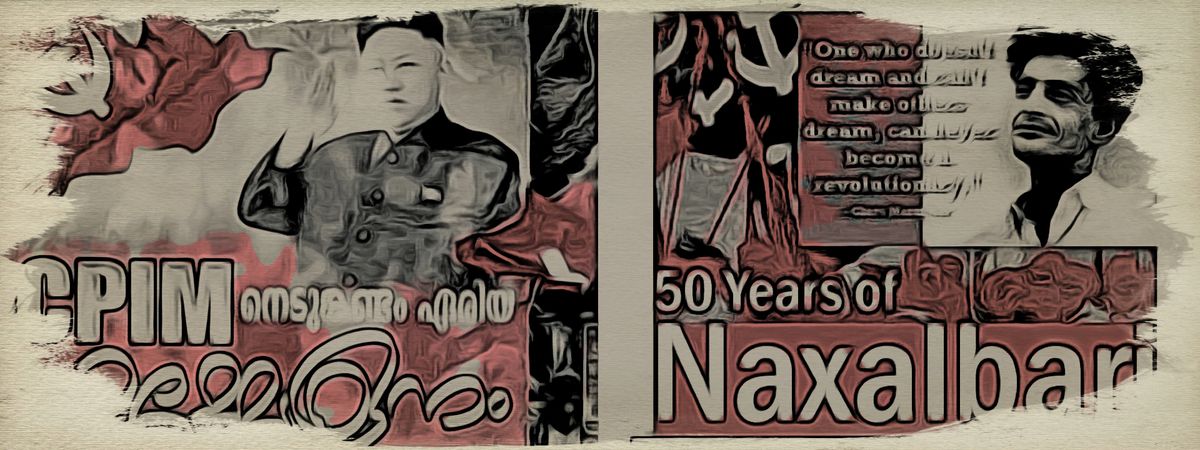
India, too, has a history of Communism.
Before 1942–45, the Communist Party of India was, in a sense, virtually absent. By entering the Congress and taking advantage of the ignorance and good faith of nationalists and socialists, the Communists occasionally managed to advance their own agenda.
Nevertheless, the people of the country and the leaders of the national movement were sympathetic towards Russia and the Communists. In our cries of “Vande Mataram” against British imperialism, the Russian-sounding slogan “Inquilab Zindabad” could also be heard.
We first experienced how fundamentally different that voice was from our own during the days of the August Revolution of 1942.
Echoing the voices of Churchill, Amery, Linlithgow and Maxwell, the champions of the so-called “People’s War” suddenly made a startling revelation: the Father of the Nation, Gandhi; Jawaharlal Nehru; Netaji Subhas Chandra Bose; Jayaprakash Narayan; Ram Manohar Lohia; and others were all enemies of the “people” and, to varying degrees, Fascists.
During those very days, these followers of Stalin became devotees of Jinnah Sahib. By presenting Pakistan’s demand for a separate homeland as a theoretical principle, they helped spread the confusion whose consequences we continue to suffer.
Even today, anyone who describes himself as a liberal or a leftist Indian and is frightened by the spectre of “communalism” will continue to engage in such manoeuvres.
But our eyes have now been opened. We have witnessed the Communists’ rampage in Telangana.
Today, no genuine nationalist or socialist can fall victim to the false propaganda of the Communists. Yet we cannot claim that there is no room left for Communism in this country. Communist parties still contest elections and achieve success in some places. Communists still organise processions and public meetings.
Why?
Because even today the Communists can find certain puppets to serve their purposes. Who are these puppets?
Some people will say that our peasants, workers and lower-middle-class people are attracted to Communism. We do not wish to say it, but we are compelled to: these very people, blind to the facts, are among Communism’s strongest supporters.
They may call themselves socialists, Congressmen or something else. By resorting to a false argument, they turn Communism into a democratic doctrine, whereas, in reality, it is nothing more than an instrument of Russia’s imperialist conspiracy.
Only two or three months ago, Comrade Ajoy Ghosh, General Secretary of the Communist Party, wrote an article in which he admitted: “Although we have achieved considerable success in recent days, our influence among the workers and peasants must still be regarded as practically negligible.”
We cannot understand why non-Communists trumpet the supposed financial strength of a bankrupt party.
Who, then, are the people in our country who support Communism and whose existence gives Ajoy Ghosh such satisfaction?
There is no need for prolonged reflection or painstaking investigation to discover them. Open your eyes and identify the ten, fifteen or twenty Communist, Russia-sympathising or China-sympathising people around you.
If you live in a large city such as Calcutta or Bombay, attend the films and exhibitions organised by the Communists once or twice. The Communist Party has established numerous front organisations in this country. Almost everyone knows organisations such as the Progressive Writers’ Association, the Indian People’s Theatre Association, the Mahila Atmaraksha Samiti, the India–China Friendship Association and the Soviet Union Friendship Association.
Something or other is continually taking place under the auspices of these organisations. You can visit them and see for yourself.
You will not find workers and peasants there. Instead, you will see well-dressed men and women from the affluent upper-middle classes, arriving in their latest motorcars.
These are the very people who rush to welcome ships bringing a little grain from Russia and China, adorning them with garlands.
Some among them travel to Moscow, Peking, Vienna, Budapest and other cities, claiming to represent the Indian people, and return to preach the message of “peace” to the world.
Who are these people? Look carefully. They are neither peasants nor workers.

Almost all are English-educated members of the upper-middle class, many of whom now hold positions of power in our country. Look at the leaders of the Communist Party as well. Most are the sons, daughters, nephews and nieces of landlords, capitalists, ministers, governors, judges and ambassadors.
Many of them have returned after obtaining higher education in England, America, Germany, France and elsewhere, using their wealth to secure these opportunities.
They have never looked at their own country through their own eyes. They have never truly regarded its civilisation, culture or people as their own.
Under British rule, these were the very people who considered drinking in clubs and gambling, while enjoying the privileges of an anglicised lifestyle, the highest achievements of life.
When the British grew weak, they became admirers of Hitler and Japan. When the Congress came to power, they put on khadi and donned Gandhi caps. Now, as dissatisfaction with the Congress grows and the drumbeat of Red China is heard, they have become Marxists.
To speak plainly, these people have no independent allegiance of their own. Wherever they see power, they begin to see their god there as well. Worshipping the powerful is their sole religion.
We do not say that these people are dishonest. Most of them are honest. But when honesty remains blind, it inevitably becomes dangerous.
You may ask why educated people who have studied abroad should be so blind. Our answer is that, to understand their own country, they read books published in London, New York, Paris, Moscow and Peking.
If an Englishman writes that India is an uncivilised country, they accept it. If Time magazine publishes a description of Purushottamdas Tandon as a reactionary and a crank, they see no need to meet or listen to Tandon himself.
If Stalin declares that India has not become independent, but remains a colony of the Anglo-American Empire even in 1953, they endorse the claim by pointing to a few white people walking along the streets or listing five or ten British firms on Clive Street in Calcutta.
If some scrap of paper published in Peking calls Pandit Jawaharlal Nehru a “mad dog” of American “imperialism,” they accept it as though they had heard a sacred Vedic pronouncement.
If Moscow Radio declares that Netaji Subhas Chandra Bose was a “Fascist thug,” they, too, begin to believe it.
With the support of these very people, the Bengali Communist monthly Parichay acquired the audacity to call the world poet Rabindranath Tagore openly a magir dalal—a procurer for prostitutes.
Likewise, in Hans, the Communist journal published by Amrit Rai, son of Premchand, the Yogi and philosopher Sri Aurobindo was described as a “despicable warmonger.”
In that same issue of Hans, Pandit Hazari Prasad Dwivedi, the author of autobiographical works on Kabir and Banabhatta, signed the Communists’ “Peace Appeal” and urged the public to follow in his footsteps.
These people must be told in unmistakable terms that India has now become independent, and that the people of an independent India possess the ability to understand what is good and bad for themselves.
Our independent country may have many shortcomings. We do not claim, as Russia and China do, that heaven has descended upon our land.
But the existence of shortcomings does not mean that, in anger, we should rush to invite Stalin and Mao Zedong here.
To continue witnessing starvation, injustice, sin and oppression in our own country while imagining that heaven exists in Russia and China is a form of treason of a particularly dangerous kind.
Those who betray their country cannot conceal their true nature from the people for long, even if they call themselves Gandhians, have themselves addressed as Mahatmas, or parade as economists and philosophers.
In the republic of independent India, everyone is free to express their views. But the people described above use that freedom for just one purpose: to deny our achievements and condemn our leadership.
If they have eyes in their heads, they should examine and understand the figures documenting the progress made in independent India.
We have undertaken the rehabilitation of countless refugees, abolished the zamindari system, launched community-development schemes and constructed great dams. Our production has increased by 25 per cent since 1947, and we have undertaken the unprecedented experiment of establishing a republic in our country.
Any independent nation could hold its head high with pride over these achievements. And we accomplished all this without taking the lives of millions of people, as Russia and China did.
The purpose of placing this book in the hands of the public is precisely this: that people may discover the truth and reject falsehood.
And Satyameva Jayate—Truth Alone Triumphs—is, after all, our national motto.
Donate to The Dharma Dispatch


