


Read the Past Episodes
 Sandeep Balakrishna
 Sandeep Balakrishna
 Sandeep Balakrishna
 Sandeep Balakrishna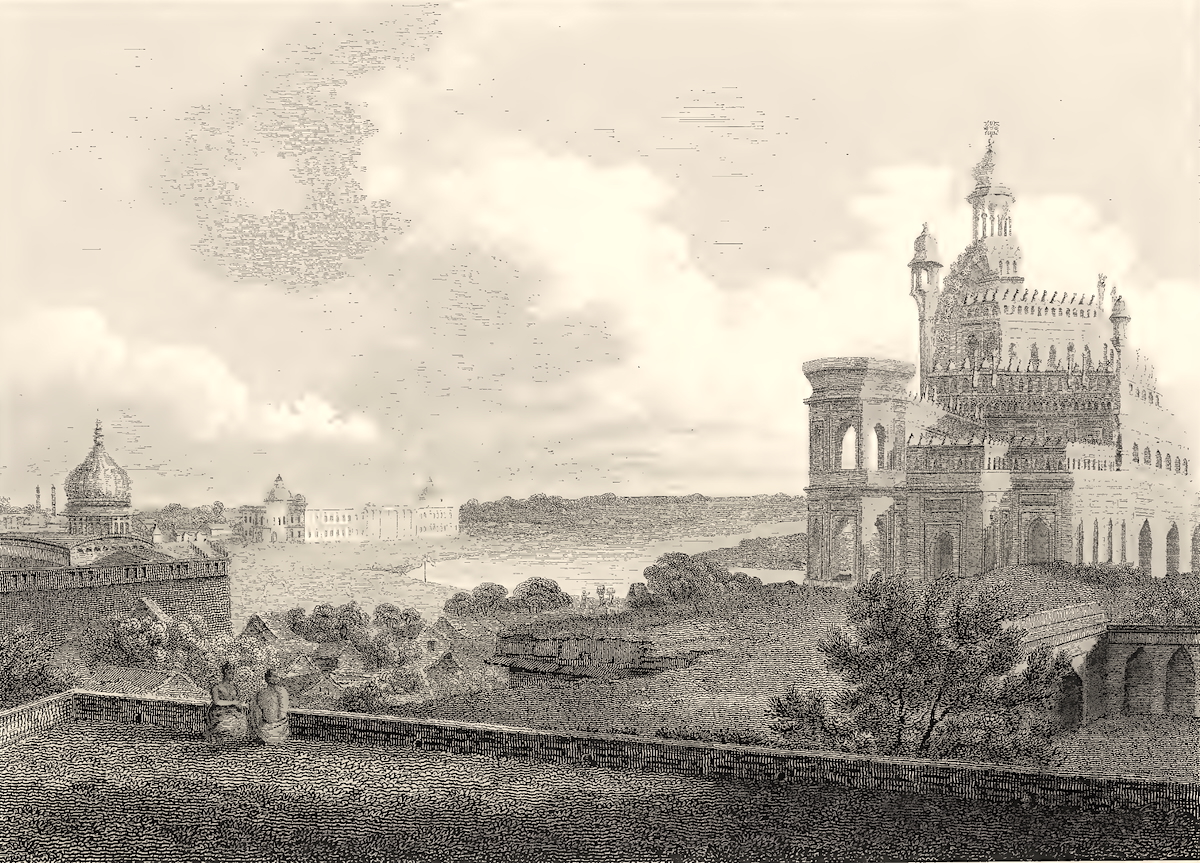
 Sandeep Balakrishna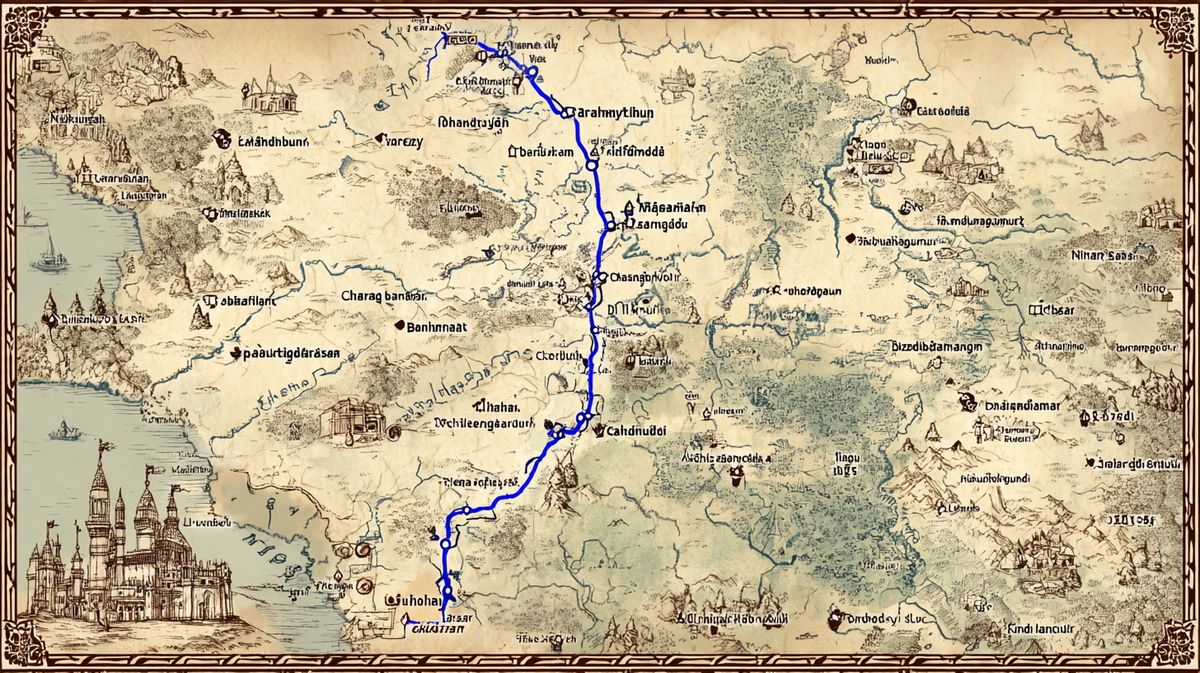
 Sandeep Balakrishna
AT FIVE in the morning on March 2, Valentia finds himself in the sprawling mansion of Robert Graham—the Registrar of the Diwani Adalat of Bengal, Bihar and Odisha—in the Bankipur Cantonment. It had emerged as the “English residence belonging to Patna” and was the “seat of the manufactory.” The town was “situated on the high bank of the Ganges, which is here five miles wide in the rainy season, but at present the major part of its bed is a sand island,” and the “view is sufficiently dreary.”
Perhaps unknown to Valentia, the very place he was lodged in was once the resplendent seat of the imperial Mauryan and Gupta power. Standing at the sacred confluence of the Śoṇa and the Ganga Nadi, it was the core of Pataliputra or Pushpapura, the capital of one of the world’s greatest civilisations. The capital was shaped like an exquisite parallelogram stretching fifteen kilometres long and three kilometres wide. A gargantuan fort with 570 towers and 64 gates enclosed by a sturdy wooden palisade, protected it.
History, working in mysterious and unpredictable ways, had eventually brought Babur’s loyal barbarian, Mir Baqi to it in the sixteenth century. His devastating campaigns in Bengal and Bihar had led him to discover an abandoned stretch of land on which he founded a town: Bankipur. About two centuries later, Robert Clive had wrested it from Mir Qasim in the decisive Battle of Buxar; recognising its strategic and commerical value, he had established a Cantonment there.
Valentia decides to tour the place and finds himself in a site populated by rice depots,
erected by the Company to contain rice. It was intended to build a sufficient number to preclude all danger of famine. It is a building of stone in the shape of a bee-hive, with two winding staircases on the outside, by which the ascent is made to pour in the grain from the top. At the bottom is a door to take it out.
The project was hastily abandoned because the East India Company soon realised that this was “by no means a rice country.” Valentia notes that the region produced excellent quality of rice. The whole endeavour had cost the Company a princely sum of ₹ 120,000; it was money “completely thrown away.”
Opium, not rice, was the prized crop grown in Bankipur by the British; it had now become the “most important article.” The copious profits it brought in was the secondary reason. The primary reason was…China. For over a century, British merchants had systematically transformed China into a nation of opium-addicts; opium parlours became as commonplace as restaurants. Somerset Maugham’s famous The Opium Den, likens them to “the little intimate beer-houses of Berlin where the tired working man could go in the evening and spend a peaceful hour.” In hindsight, it reads like a literary apologia for a vile trade that led to two horrific wars waged by England against China.
When the Chinese government banned opium, smuggling naturally flourished on an epic scale; by 1797, the East India Company was smuggling 308 tonnes of opium into China each year. Valentia suffers from no moral qualms; he is actually elated:
…the demand [for opium] is increasing, which is fortunate”… [China is] now dependent on India for what is becoming a necessary article. The non-importation would probably excite a rebellion. (Emphasis added)
It excited not a rebellion but a full-fledged war that began thirty-seven years after Valentia wrote his entry on Bankipur. The British government stood by its biggest financiers—the pirates of the East India Company—and devastated several Chinese ports.
Bankipur, as Valentia happily notes, was also a lucrative repository of saltpetre which the East India Company ruthlessly mined and sent to England. Cotton was the other booming crop that the Company hauled by the tonne and dispatched “to England to be there printed.”

On March 4, Valentia visits Patna with his tour guide, the aforementioned Robert Graham. His description of the city is the nineteenth-century proof of the centuries of ravages it had endured. It had been one of the wealthiest and elegant cynosures of the world under the Gupta and other Hindu Empires.
Now, the city had become a wrecked town and the town was simply “one continued street the whole way, and… the houses in general are of mud, and there are few remains that indicate the capital of Bahar [Bihar].” The picture then becomes darker, sinister and melancholic.
In a gateway I observed some very black stone most beautifully carved, which had probably been taken from some ancient pagoda. There are the remains of a fort, and of the British factory where the massacre of two hundred prisoners was perpetrated by the adventurer Summers…then in the service of Meer Cossim [Mir Qasim]. A monument, but without an inscription, is erected to their memory in the European burying ground.
The “adventurer Summers,” was actually the German mercenary, Walter Reinhardt, whose wife, Begum Samru is more famous in the annals of 18th century north Indian history. The monument is the obelisk that now stands over an infamous well in the Old Patna cemetery.
Valentia is clearly unimpressed with Patna but makes a fleeting note that it is the “celebrated ancient city of Palibothra.” He closes the day with a routine entry that the “whole society of Bankepore, amounting to eight or nine families, this day dined with us.” The number—eight or nine families—offers a socio-historical clue as to the lesser-known nuances of colonialism.
The fact that such a tiny number comprised a “society” in Valentia’s mind tells us that the initial days of the East India Company’s “rule” in India was a regime of cantonments; the deliberate British isolation from the society they called as “native,” underwent multi-pronged transformation in later years—the most pronounced of these were the exclusive “clubs” into which dogs and Indians were not allowed.
The next morning, Viscount Valentia sets out for Varanasi; his first stop is Buxar. That journey will be narrated in the next part of this series.
To be continued
Donate to The Dharma Dispatch


